Create Your First Project
Start adding your projects to your portfolio. Click on "Manage Projects" to get started


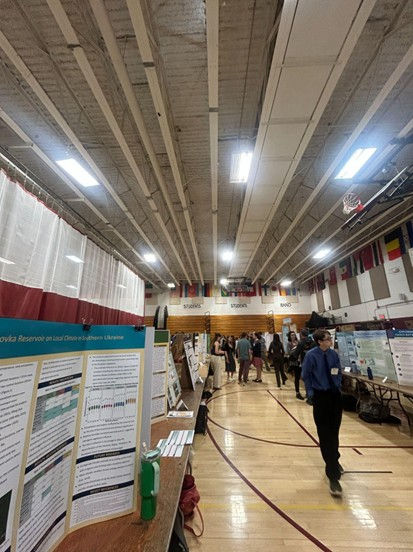
Maine State Science Fair
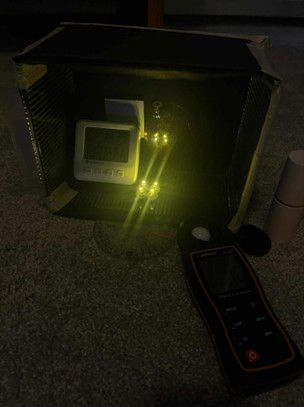
This project explored how humidity and LED color temperature influence light pollution and skyglow. To create a controlled testing environment, our team designed a transparent experimental box with all sides covered in black paper to block external light. This “sky capsule” setup allowed us to simulate different atmospheric conditions while minimizing outside interference.
Humidity inside the chamber was controlled using a humidifier, which helped adjust the air density and water vapor concentration during the experiment. We then compared two different LED light sources: a 3000K warm light and a 5000K cool light, to observe how varying color temperatures affected light scattering and visibility.
Through background research and experimentation, we discovered that humidity increases light pollution because water vapor and tiny droplets scatter artificial light in the atmosphere, making the night sky appear brighter. Our findings also supported previous studies showing that cooler LEDs (5000K) produce more skyglow compared to warmer LEDs (3000K). Based on these observations, lower color temperature lighting is recommended as a more environmentally friendly option for reducing light pollution in urban areas.
This project strengthened my skills in scientific research, experimental design, data analysis, and collaborative problem-solving while allowing me to investigate a real-world environmental issue related to sustainable lighting technology.